
What Stands Out
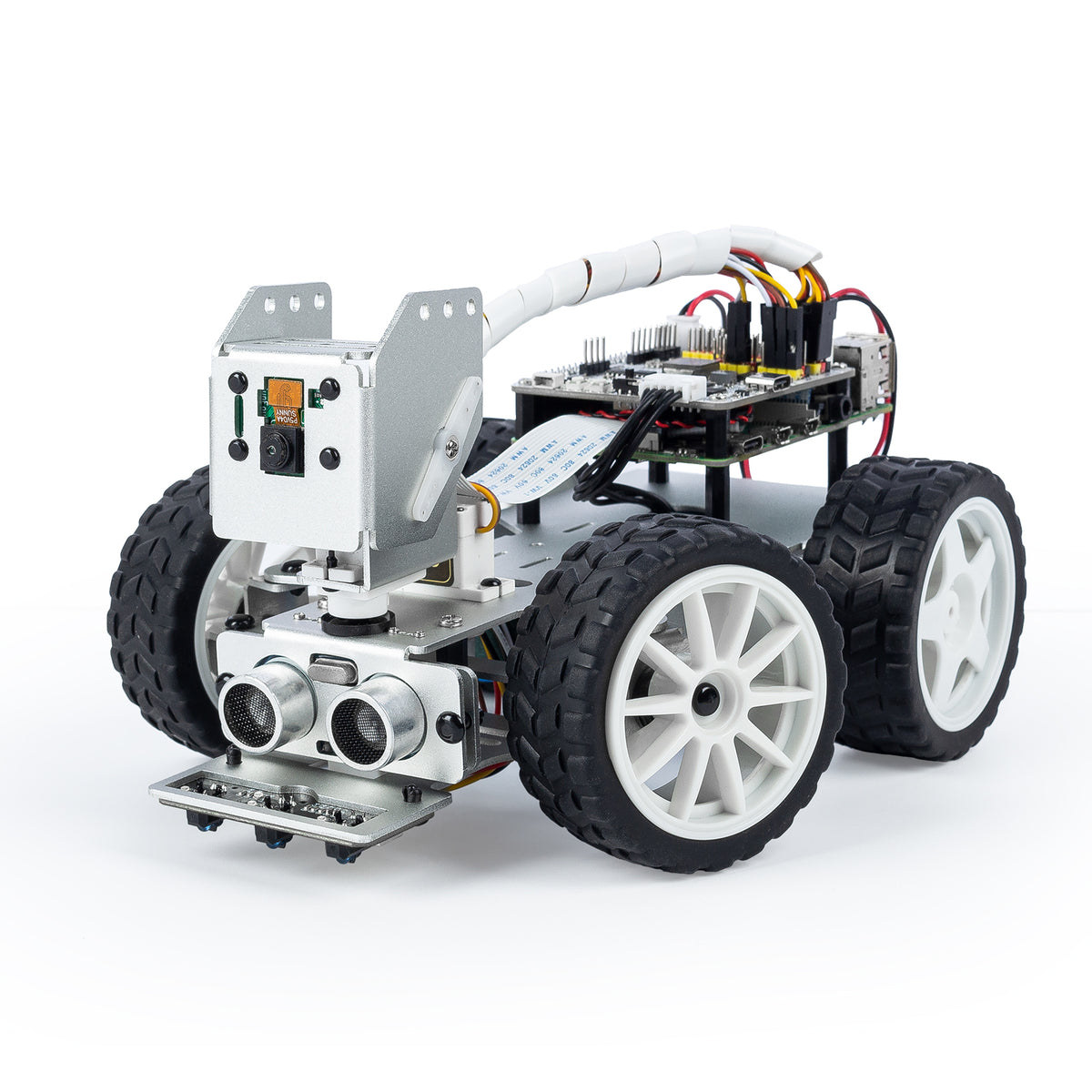
PiCar-X combines pan/tilt camera, ultrasonic sensing and line tracking.
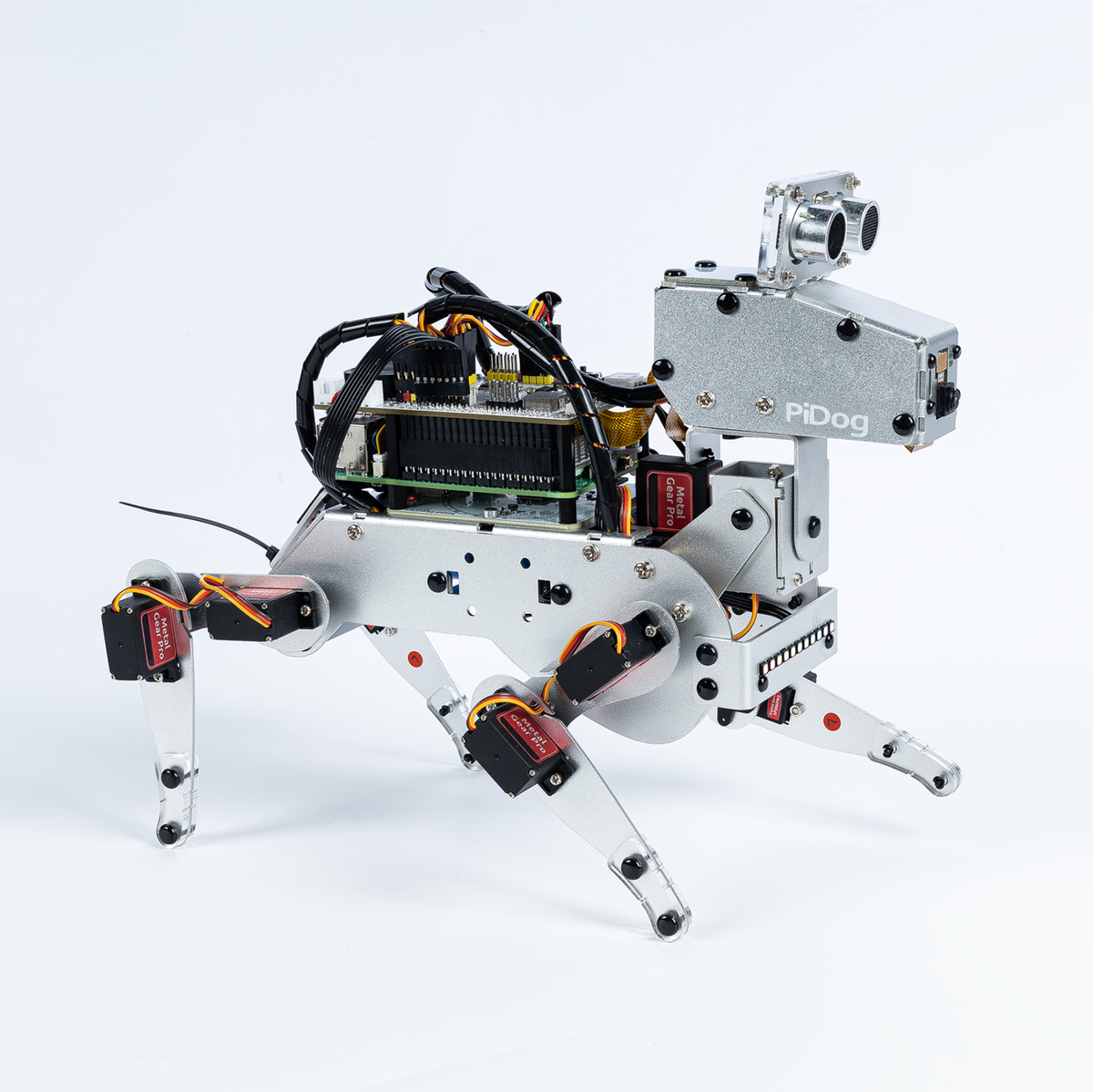
PiDog includes 12 servos, motion sensing, touch and sound modules.
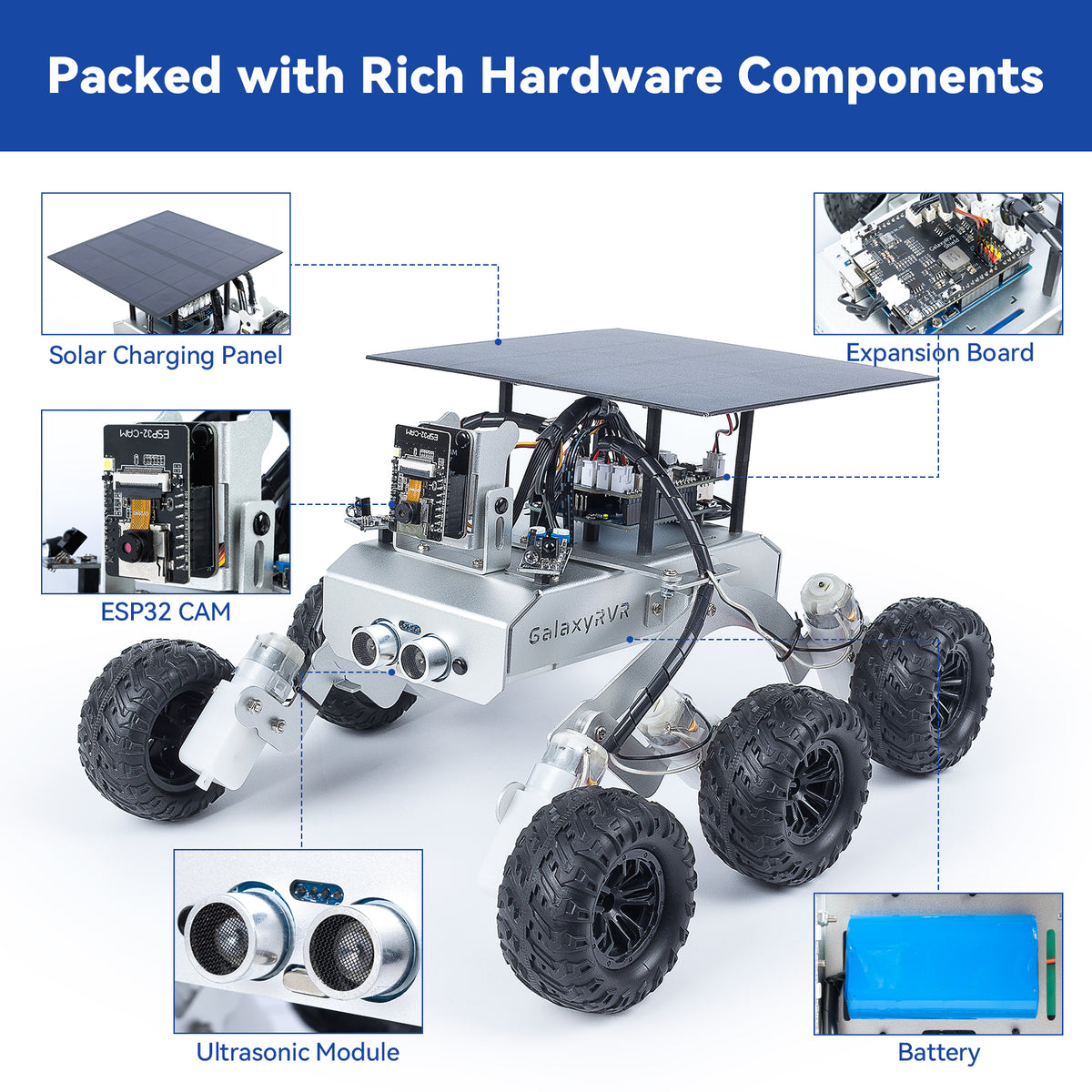
GalaxyRVR has a rocker-bogie suspension and FPV camera for rover experiments.
What to Check
Confirm that the Raspberry Pi or controller board is included in the exact bundle.
If using Raspberry Pi 5 with PiDog, confirm V2 hardware.
Review batteries, tools, software packages and service costs, as well as shipping eligibility.
Product Review
1. SunFounder PiCar-X AI Robot Smart Car Kit for Raspberry Pi
Product overview
A product overview has not been provided.
Overview
SunFounder PiCar-X is a build-it-yourself four-wheel robot car that uses a compatible Raspberry Pi as its controller. Its key educational tasks are camera vision, line tracking, steering and obstacle detection; optional voice or large-language-model projects depend on separate software, network access, setup and potentially external services. This is a review of the manufacturer's published documentation, not a hands-on test.
Key Features
- Raspberry Pi-based robot car; manufacturer's current product listing specifies Raspberry Pi 5/4/3B+/3B/Zero 2 W support, but exact kit and board revision should be checked.
- Two-axis pan/tilt camera, ultrasonic ranging module and three-channel grayscale line-following sensor.
- SunFounder Robot HAT integrates motor/servo driving, speaker and expansion interfaces.
- Programming examples for Python and Scratch/block-based workflows; computer-vision functions require additional libraries and configuration.
- Raspberry Pi board not included. Confirm 18650 battery cells and any other power components with the selected kit.
Best For
Students and makers who want a wheeled robot platform for Python, steering, line-following and camera experiments.
Trade-offs and Buyer Checks
Expect assembly, servo calibration, battery handling and Raspberry Pi setup. A camera-equipped kit does not automatically run AI services out of the box. Verify your exact Pi model and OS image before purchasing.
2. SunFounder PiDog AI Robot Dog Kit for Raspberry Pi
Product overview
A product overview has not been provided.
Overview
PiDog is a quadruped robotics kit intended for experimenting with gait, movement, sensors and Python programming. The 12-servo mechanical platform can be programmed to walk, sit, respond to touch and detect obstacles, with camera and sound modules enabling further maker projects. It is not an autonomous consumer robot dog that works without configuration.
Key Features
- 12 servo-driven joints for robot-dog postures and motion sequences.
- Camera, ultrasonic ranging, sound direction, touch, speaker and 6-DOF motion-sensing functionality listed in SunFounder documentation.
- SunFounder documentation distinguishes the older Standard/V1 version from V2. Only the documented V2 revision adds support for Raspberry Pi 5; check the precise model supplied.
- Python examples and optional speech recognition, speech synthesis or LLM demos require compatible OS/libraries and, for some services, external credentials and connectivity.
- Raspberry Pi not included.
Best For
Intermediate makers and classrooms exploring four-legged robot motion, servo control and multisensor robotics.
Trade-offs and Buyer Checks
More servo channels mean more calibration and troubleshooting than a basic wheeled car. Pi 5 owners should confirm V2 hardware, 64-bit Raspberry Pi OS compatibility for certain speech dependencies, battery and power supply requirements, and current stock before ordering.
3. SunFounder GalaxyRVR Mars Rover Kit for Arduino
Product overview
A product overview has not been provided.
Overview
GalaxyRVR is a six-wheel educational rover built around a rocker-bogie suspension design for terrain experiments. Unlike PiCar-X and PiDog, it is positioned for Arduino-compatible programming, with ESP32 camera video, app control and basic exploration tasks. It offers a different learning path from Raspberry Pi robotics.
Key Features
- Six-wheel rocker-bogie suspension and aluminum-alloy framework, inspired by planetary rover designs.
- Compatible with Arduino Uno R3 according to SunFounder; confirm whether the controller board is part of the specific order.
- ESP32 camera for first-person viewing and obstacle-avoidance sensors.
- RoboPilot app, Arduino IDE and Scratch-style/Mammoth Coding learning paths documented by SunFounder.
- Product page describes a solar panel; check its function and charging limitations rather than assuming perpetual solar operation.
Best For
Students and hobbyists wanting an Arduino-style terrain rover with FPV control and mechanical suspension concepts.
Trade-offs and Buyer Checks
The rover is not the same as a Raspberry Pi-controlled AI robot and does not guarantee navigation across every outdoor surface. Confirm controller inclusion, operating requirements, battery type, weather limitations and app compatibility before ordering.
Buying Notes
Choose by platform first (Raspberry Pi versus Arduino). Check controller version, kit contents, battery power, operating-system dependencies and available tutorials before comparing price. Seller-listed AI features require setup and may involve external services; do not assume cloud access is included.
Final Verdict
PiCar-X is best for wheeled Raspberry Pi vision and programming; PiDog for more demanding quadruped servo projects; GalaxyRVR for Arduino rover mechanics. Verify controller inclusion, hardware version and battery requirements.
FAQ
Does PiCar-X include a Raspberry Pi?
No. The current SunFounder PiCar-X listing and product documentation state that the Raspberry Pi board is not included. Check required power and other components for your exact bundle.
Does PiDog work with Raspberry Pi 5?
The manufacturer documentation distinguishes versions: PiDog V2 supports Raspberry Pi 5, while Standard/V1 does not. Confirm the kit revision before ordering.
What is the difference between PiCar-X and GalaxyRVR?
PiCar-X is a four-wheel Raspberry Pi robot for camera, steering and line tracking. GalaxyRVR is a six-wheel Arduino-style rover focused on rocker-bogie suspension, FPV and terrain experiments.
How We Researched
We researched the official SunFounder PiCar-X, PiDog and GalaxyRVR product pages plus their published assembly/tutorial documentation and SunFounder shipping information. Price, stock and capability statements are vendor claims, not results of TrekReview hands-on tests.
Three Types of Educational Robot Kits
PiCar-X teaches a wheel-and-steering workflow, PiDog focuses on legged locomotion and multi-servo behavior, and GalaxyRVR uses a six-wheel rocker-bogie suspension for rover projects. They differ in their controllers, software setup and the mechanical principles they illustrate. A 12-servo robot dog may provide more motion possibilities than a car, but it also requires more careful assembly and troubleshooting. A terrain rover is attractive for suspension projects but is not automatically suitable for wet, rough or extreme outdoor conditions.
Compare Options
| Model | Platform | Main learning focus | Key features | Essential buyer check |
|---|---|---|---|---|
| PiCar-X | Raspberry Pi | Steering, camera, sensors, Python/Blockly | Pan/tilt camera, ultrasonic, grayscale line tracking | Raspberry Pi and battery requirements; OS and servo calibration |
| PiDog | Raspberry Pi | Legged motion and sensor interaction | 12 servos, camera, touch, gyroscope and sound sensors | V1 versus V2 compatibility with Raspberry Pi 5; power/setup |
| GalaxyRVR | Arduino-compatible | Rover mechanics and FPV experiments | Six wheels, rocker-bogie, ESP32 CAM and obstacle sensors | Controller inclusion, battery type and terrain suitability |
PiCar-X: The Entry Point for Vision and Driving
PiCar-X combines a camera, ultrasonic module and a line-tracking sensor with steering and drive motors. SunFounder's instructional examples introduce Python and block-based code, servo calibration, basic obstacle avoidance and image recognition. These features are a useful progression from simple GPIO experiments toward a moving system. The current listing also highlights optional LLM integration; such use cases require third-party software configuration and may require an internet connection or service fees.
The Raspberry Pi board is not included. Users should validate whether the selected board and OS image support the chosen tutorials, prepare the required power source and follow instructions for calibrating steering and the pan/tilt camera. For young learners, an experienced builder may be needed for assembly and charging.
PiDog: Choose It for Walking Mechanisms, Not Plug-and-Play AI
PiDog uses 12 servos to create dog-like walking and postures. The manufacturer describes an ultrasonic module, camera, touch and sound-direction sensing, and a 6-DOF IMU. Its Python demonstrations cover actions and sensor input, with optional text-to-speech and voice-related functions after installing additional software. These interactions are developer projects, not proof of reliable autonomous decision-making.
There is a key purchasing distinction in the official documentation: PiDog Standard/V1 works with earlier Raspberry Pi generations, but the updated V2 hardware is required for Raspberry Pi 5 support. A Pi 5 owner should verify the exact shipped revision rather than rely on a generic product title. Also budget for assembly, servo zeroing, software libraries and a safe power arrangement.
GalaxyRVR: Arduino Rover and First-Person View
GalaxyRVR simulates the mechanical form of a Mars rover through its six-wheel rocker-bogie suspension and metal frame. The manufacturer's documentation covers remote app driving, camera first-person view, obstacle sensing and programming with Arduino IDE or block-based tools. A solar panel is listed, but this is not evidence that the rover can operate indefinitely without charging.
For a class teaching mechanical suspension, embedded programming and navigation, GalaxyRVR can be more relevant than a robot dog. Buyers should check which Arduino-compatible controller, battery and cables are included in the ordered kit, the programming environment and whether the planned surface is suitable. A product demo on rocks or grass is not a durability guarantee.
Hardware, Software, Safety and Shipping
A realistic budget includes more than the advertised kit price. Check whether you need to buy a Raspberry Pi board, microSD card, rechargeable battery cells and charger, tools and optional peripherals. Robot projects with lithium batteries and exposed moving parts should be built and supervised using the manufacturer's safety instructions. For classroom or club deployment, verify stable Wi-Fi, working OS packages, reproducible code and replacement-parts availability.
SunFounder publishes a free-shipping policy for many supported countries with no minimum order, while some destinations incur additional shipping and customs costs. The shipping policy describes a 30-day refund window, but current storefront badges also mention 15-day returns; this discrepancy should be checked against the written policy for the specific order and destination. Review current stock before purchasing, as a model may be sold out despite appearing in the catalog.