
What Stands Out
CineLog35 V3 and CineLog30 V3 offer protected propeller layouts and dedicated damped camera mounting in different battery classes.
Cinebot25 V2 and Cinebot35 use modular, independently suspended O4 Pro camera assemblies, with different airframe sizes and power requirements.
MARK5 and Vapor-X5 put O4 Pro imaging into unguarded five-inch freestyle formats, while MOZ7 V2 and Tern40 LR V2 address different sizes of long-range platform.
DarkStar16 and T-Cube18 offer small-aircraft alternatives, but the former uses O4 Pro while the latter lists the standard O4 Air Unit.
What to Check
Match the specific PNP, ELRS or TBS receiver version to your radio and goggles; a PNP listing is not necessarily a ready-to-fly kit.
Check battery voltage, capacity and connector by model; 2S, 4S and 6S recommendations are not interchangeable.
Confirm whether GPS, the camera/video transmitter and any action-camera hardware are included in the selected edition.
Treat GEPRC flight-time figures as test-condition references and review U.S. flight and registration requirements for your actual aircraft and planned operation.
Product Review
1. GEPRC CineLog35 V3 O4 Pro FPV Drone
Product overview
The CineLog35 V3 sits near the center of GEPRC's cinematic lineup. Its 3.5-inch guarded layout combines a bottom-mounted, vibration-isolated DJI O4 Air Unit Pro camera with a dedicated action-camera mount. That gives a pilot a choice between recording through the O4 Pro system and mounting a compatible action camera, rather than treating those as interchangeable accessories.
GEPRC redesigned the propeller guards and provides GPS and non-GPS options. The O4 Pro configuration supports up to 4K/120fps recording through the fitted video system; actual flight duration depends on battery and flying style. Buyers should match the selected receiver and GPS option to their control setup before ordering.
Key Specifications
- 3.5-inch class; 142 mm wheelbase; protected propellers
- DJI O4 Air Unit Pro; PNP or ELRS 2.4 GHz; GPS and non-GPS variants
- 6S LiPo 1100–1300 mAh recommended; GEPRC quotes 7–8.5 minutes in smooth cruising

2. GEPRC Cinelog30 V3 O4 Pro Quadcopter
Product overview
For buyers who want O4 Pro imaging in a smaller guarded aircraft, the CineLog30 V3 uses a 3-inch frame with a wrap-around electronics compartment. GEPRC adds dust covers for the data ports, a protective camera canopy and its CineLog-style underslung damped camera mounting. Those design details address component exposure and vibration rather than changing the supported camera format.
The 4S platform differs from the 6S CineLog35 V3, so battery choice is not interchangeable. The manufacturer's stated 8-minute-10-second flight time comes from slow-cruising conditions; pilots should treat it as a reference and select the receiver version their radio supports.
Key Specifications
- 3-inch class; 128 mm wheelbase; DJI O4 Air Unit Pro
- PNP, ELRS 2.4 GHz or TBS Nano RX variants
- LiHV 4S 660–720 mAh recommended; 8 min 10 sec manufacturer slow-cruise estimate

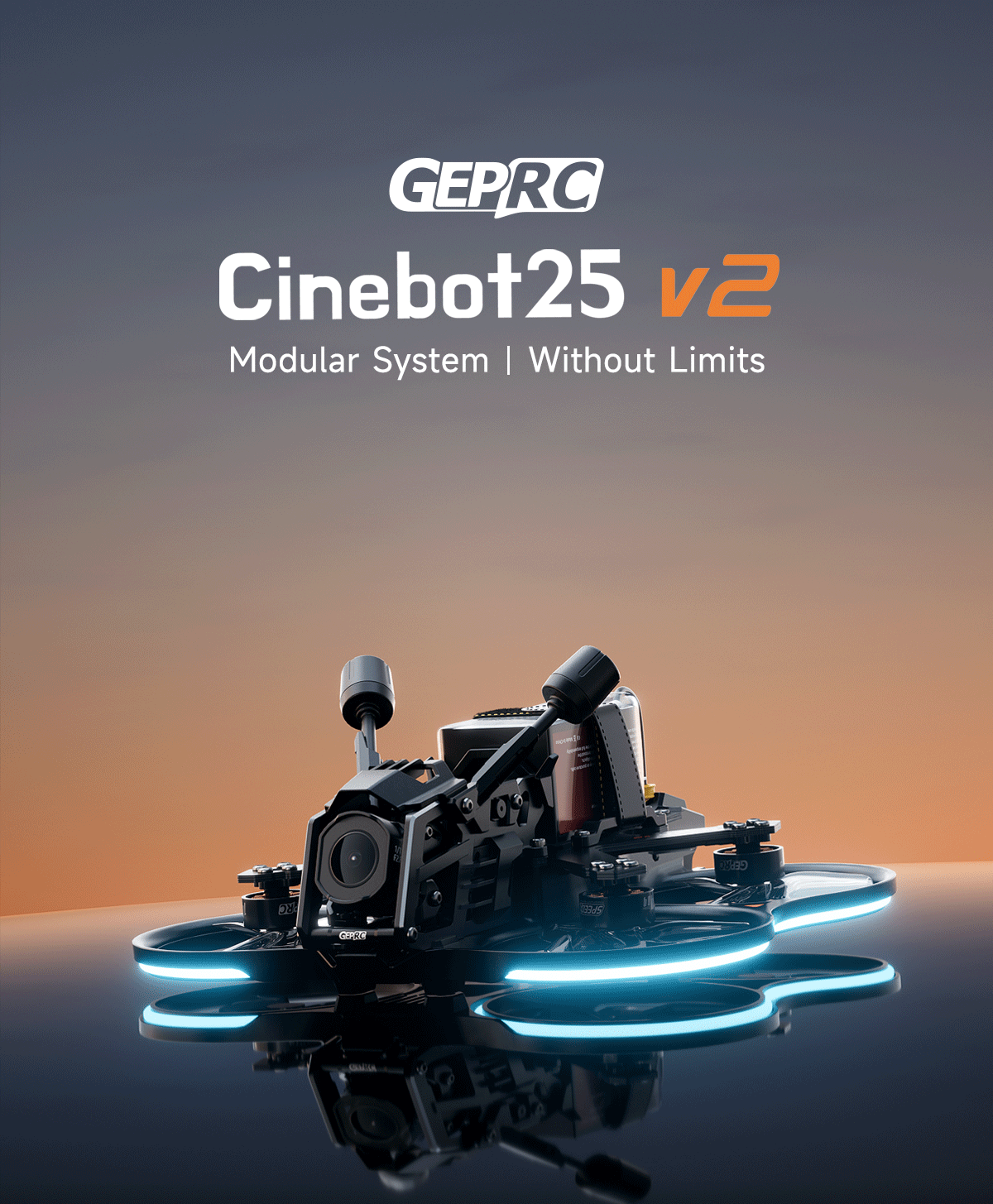
3. GEPRC Cinebot25 V2 O4 Pro Quadcopter
Product overview
The Cinebot25 V2's defining feature is its independently suspended DJI O4 Air Unit Pro module. GEPRC describes a quick-release design so the imaging module can be removed and adapted to other supported frames. That is a meaningful service and configuration difference from models with a conventional fixed camera mount, provided the other frame is actually compatible.
Its 2.5-inch configuration uses 4S batteries and is listed with a GEP-M10nano GPS module. The manufacturer describes a 5–8-minute slow-cruise range, but the result depends on flight style. Do not assume every future GEPRC frame can accept the module without a published compatibility listing.
Key Specifications
- 2.5-inch class; separate damped DJI O4 Air Unit Pro module
- PNP or ELRS 2.4 GHz; GEP-M10nano GPS in specifications
- LiHV 4S 750–1100 mAh recommended; GEPRC slow-cruise 5–8 minutes
4. GEPRC Cinebot35 O4 Pro Quadcopter
Product overview
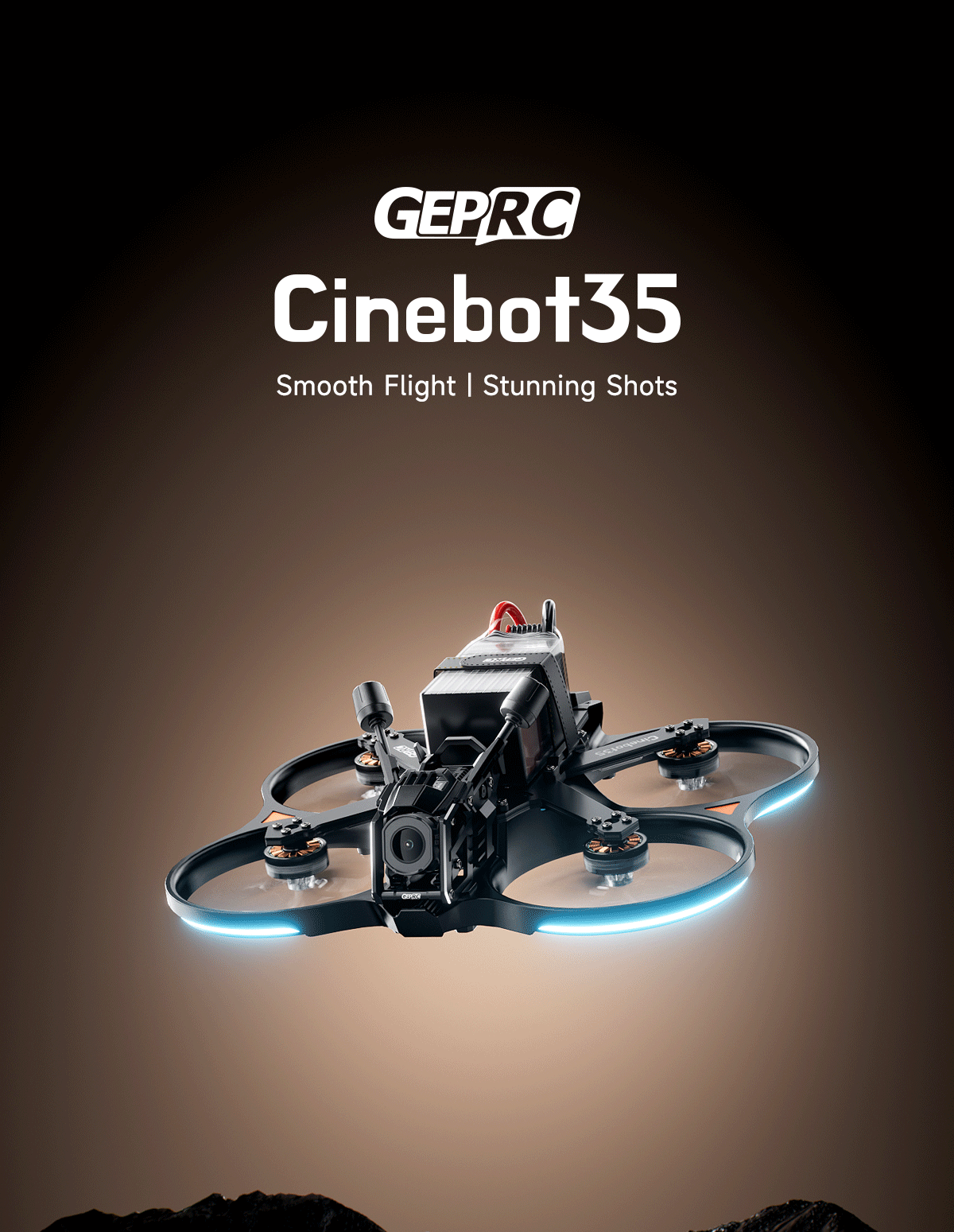
Cinebot35 carries GEPRC's modular camera approach into a 3.5-inch platform. Its separately mounted O4 Pro imaging assembly uses six suspension points, while the larger airframe adds a high-coverage electronics bay and a dedicated action-camera mount. These are tangible reasons to consider it instead of the smaller Cinebot25 V2 when the intended camera and battery arrangement calls for a larger platform.
The product specification lists a GEP-M10Q GPS and 6S 1300–1550mAh batteries. GEPRC's 10–11-minute figure is for slow cruising; independent testing has reported a different result under its own conditions, so avoid using the figure as a promised session time.
Key Specifications
- 3.5-inch class; six-point suspended DJI O4 Air Unit Pro camera unit
- PNP or ELRS 2.4 GHz; GEP-M10Q GPS in specification
- 6S 1300–1550 mAh recommended; GEPRC quotes 10–11 minutes for slow cruising
5. GEPRC DarkStar16 O4 Pro TinyWhoop
Product overview
DarkStar16 brings the DJI O4 Air Unit Pro into GEPRC's much smaller 1.6-inch TinyWhoop format. A modular top cover and four-point camera damping are intended to reduce image vibration, while the guarded micro layout provides a different flying format from a 3.5-inch CineWhoop.
The product page specifies a LiHV 2S 530mAh battery and gives approximately four minutes for low-speed indoor cruising. That shorter manufacturer reference is an important planning distinction from the larger models, not an estimate for every type of flight.
Key Specifications
- 1.6-inch guarded TinyWhoop; DJI O4 Air Unit Pro
- PNP or ELRS 2.4 GHz receiver option
- LiHV 2S 530 mAh recommended; 4 minutes stated for low-speed indoor cruising

6. GEPRC MARK5 O4 Pro DC FPV Drone
Product overview
MARK5 O4 Pro DC takes a different route from GEPRC's prop-guarded cinematic models. This five-inch deadcat configuration uses a DJI O4 Air Unit Pro and a vibration-damped aluminum camera mount, with receiver choices spanning PNP, ELRS 2.4G and TBS Nano RX. Its layout targets pilots looking at the MARK5 freestyle family rather than a guarded CineWhoop.
GEPRC publishes separate details for the standard and DC versions on the same page. Buyers of the DC model should use the DC-specific wheelbase, connector and weight information, and select optional GPS explicitly when required. The manufacturer's quoted 6–8-minute slow-cruise range can vary with use.
Key Specifications
- DC-version wheelbase: 230 mm; DJI O4 Air Unit Pro
- 6S PNP, ELRS 2.4G or TBS Nano RX, with optional GPS variants
- DC version: 433.4 g ±5 g; LiPo 6S 1050–1550 mAh recommended

7. GEPRC Vapor-X5 HD O4 Pro FPV Drone
Product overview
Vapor-X5 HD O4 Pro is GEPRC's five-inch Wide X entry in the O4 Pro Vapor family. Its camera sits behind a protective front lip, and the design combines an aluminum lens surround with silicone vibration damping. Unlike the Vapor-D5, this listing is specifically for the X5 frame, so the two should not be treated as cosmetic variants.
GEPRC lists PNP, ELRS and TBS receiver options, with or without GPS, plus a 6S LiPo 1300–1800mAh recommendation. The page quotes a 14–19-minute flight-time range without a clear matching test condition in the available text; actual endurance needs to be judged against the chosen setup.
Key Specifications
- Wide X five-inch frame; 230 mm wheelbase; DJI O4 Air Unit Pro
- PNP, ELRS 2.4 GHz or TBS Nano RX; GPS options
- LiPo 6S 1300–1800 mAh recommended; 409 g ±5 g stated for the PNP version

8. GEPRC MOZ7 V2 O4 Pro Long Range FPV Drone
Product overview
MOZ7 V2 O4 Pro is the long-range specialist among the larger GEPRC aircraft in this selection. The 7.5-inch platform and DJI O4 Air Unit Pro are paired with receiver choices that include PNP, ELRS 915MHz/2.4GHz GemX and TBS Nano RX. It is a different purchase from a short-flight, protected CineWhoop: batteries, radio link and planned flight area play a bigger role.
GEPRC recommends a 6S 3300mAh LiPo or an 8000mAh Li-ion configuration and quotes 25 minutes under slow-cruising conditions. That is not an independently verified endurance promise, nor a statement that the radio or video link may legally be used at a given distance.
Key Specifications
- 7.5-inch propeller class; DJI O4 Air Unit Pro
- PNP, ELRS 915 MHz/2.4 GHz GemX or TBS Nano RX options
- 6S 3300 mAh LiPo or 8000 mAh Li-ion recommended; 25-minute merchant slow-cruise figure

9. GEPRC Tern40 LR V2 O4 Pro Long Range FPV Drone
Product overview
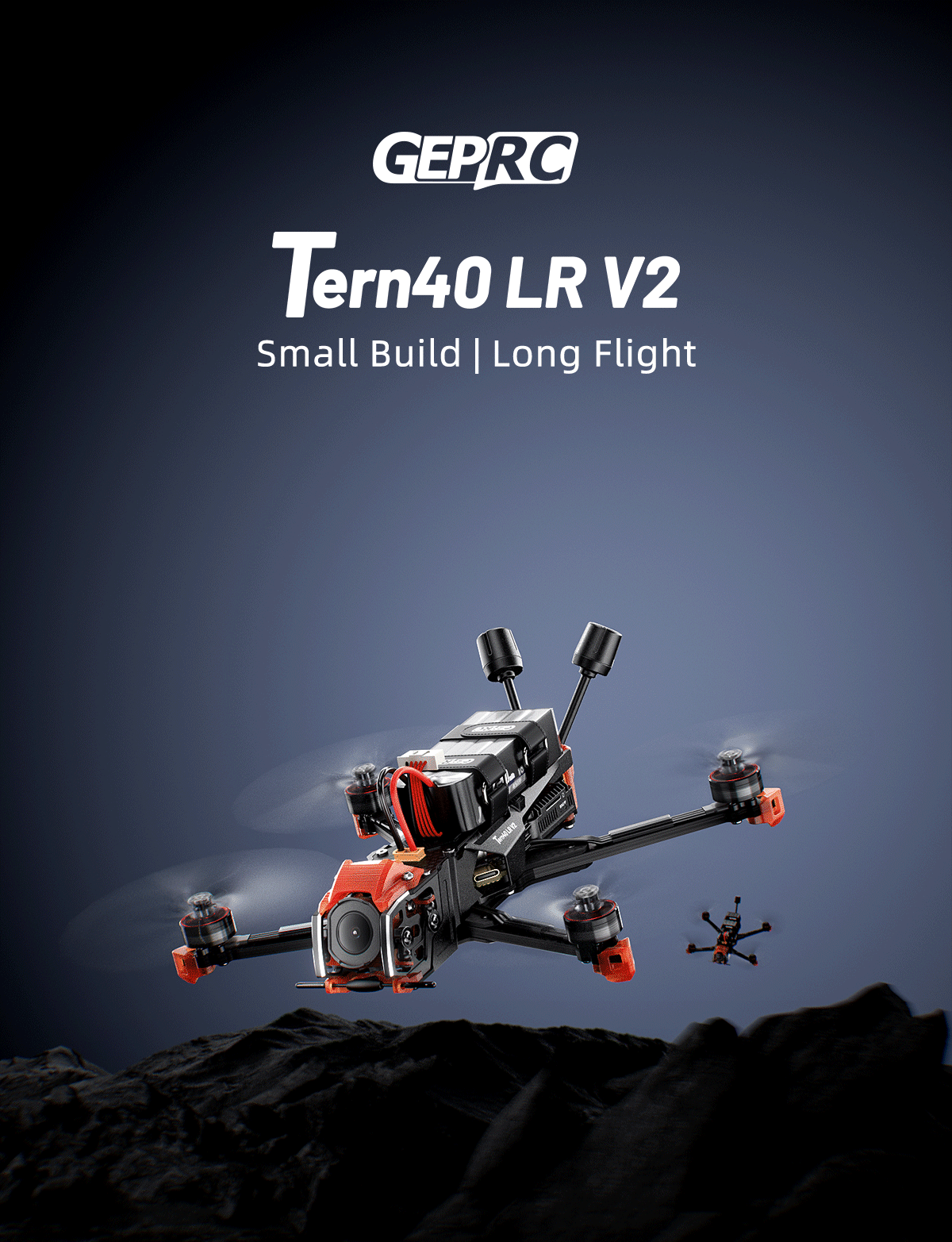
Tern40 LR V2 O4 Pro addresses a different long-range question from the larger MOZ7. Its four-inch deadcat frame is built around the DJI O4 Air Unit Pro, with four-point camera suspension and a listed GEP-M10nano GPS module. The deadcat geometry is intended to keep the forward camera view clearer, while the smaller battery connector and airframe call for a different power setup.
GEPRC gives a 12-minute reference using a LiHV 4S 720mAh battery and a specified landing voltage. Receiver versions include PNP and two ELRS frequencies. The page also mentions an 18650 battery alternative, but buyers should follow the exact build instructions rather than assume every 18650 pack fits.
Key Specifications
- 4-inch long-range class; 186.7 mm wheelbase; DJI O4 Air Unit Pro
- GPS listed; PNP with GPS, ELRS 2.4 GHz with GPS, ELRS 915 MHz with GPS
- XT30; LiPo 4S 660–850 mAh or listed 18650 alternative
10. GEPRC T-Cube18 HD O4 Quadcopter
Product overview
T-Cube18 HD O4 is the compact alternative for someone who wants to fly a micro FPV model without choosing an O4 Pro airframe. GEPRC lists the standard DJI O4 Air Unit, an 87mm wheelbase and a small 2S power system, positioning it for short indoor or outdoor sessions rather than the long-range tasks of MOZ7 or Tern40.
The main buying check is the receiver configuration. The specification calls out built-in ELRS 2.4GHz, but the options field also names PNP and TBS Nano RX. That inconsistency is worth resolving with the seller before placing an order. GEPRC's 3–5-minute flight estimate is based on low-speed cruising.
Key Specifications
- 87 mm wheelbase; DJI O4 Air Unit (standard, not Pro)
- LiHV 2S 380 mAh recommended; 3–5-minute low-speed-cruise estimate
- Specification says built-in ELRS 2.4 GHz; options also list PNP and TBS Nano RX

Buying Notes
- Decide which DJI O4 video system you need: the T-Cube18 lists standard O4, while the other nine selected builds list O4 Pro. Video-system naming is not interchangeable.
- Bring compatible goggles, a radio/control link and the correct flight battery into your budget. Check what the selected GEPRC box actually includes; these are not assumed to be complete ready-to-fly kits.
- GPS, receiver frequency, modular camera mounts and optional accessories vary by product and edition. A camera module described as transferable must be checked against an explicitly supported receiving frame.
- For U.S. flights, verify current FAA requirements and local airspace rules for the specific aircraft and operation before use.
Its shipping policy estimates 15–40 business days for standard shipping or 3–10 business days for express shipping, with delivery varying by destination and delays possible.
Express service, battery-specific shipping and import taxes can change delivery costs or timing; confirm the U.S.
checkout options for your order.
Obtain approval through a support ticket or email before returning anything, and put the ticket/RMA number on the package.
Customer-initiated returns require the buyer to pay return shipping and related charges; shipping costs may be deducted from refunds.
Opened, used or incomplete returns can be refused.
Report order-item discrepancies within five days of delivery; wrong-product claims have a separate 14-day instruction.
The remedy depends on the issue and assessment; GEPRC may supply a replacement defective part or propose a repair.
Crash damage, misuse and other exclusions apply.
A separate return-policy page lists different windows for specific electronic components and batteries, so confirm which policy covers your purchased item.
Final Verdict
For a guarded cinematic platform with a flexible action-camera option, the CineLog35 V3 is a strong first comparison point; the smaller CineLog30 V3 has a different 4S battery requirement. The Cinebot25 V2 deserves special attention when a removable, damped O4 Pro module is more useful than simply increasing frame size, while Cinebot35 extends that idea to a 3.5-inch 6S aircraft.
For unguarded five-inch flying, compare MARK5 O4 Pro DC with Vapor-X5 HD O4 Pro by frame geometry, receiver and GPS selection instead of assuming their shared O4 Pro system makes them equivalent. Tern40 LR V2 and MOZ7 V2 are distinct long-range choices with substantially different airframes and battery recommendations. DarkStar16 and T-Cube18 answer the micro-size question but have different O4 video hardware. The decisive purchase condition across all ten is getting the exact video, receiver, battery and GPS combination you intend to use.
FAQ
Does every GEPRC model in this review include DJI O4 Pro?
No. Nine selected models are listed with DJI O4 Air Unit Pro; the T-Cube18 HD O4 listing specifies the standard DJI O4 Air Unit. Confirm the exact product edition rather than relying on “O4” alone.
Are the Cinebot25 V2 and Cinebot35 camera modules interchangeable?
GEPRC describes a removable modular O4 Pro design for the Cinebot family. Module reuse should be limited to combinations explicitly confirmed by GEPRC; “modular” does not establish compatibility with every frame.
What is the difference between PNP and ELRS options?
These names describe different receiver arrangements. Product pages list PNP and external ELRS or TBS choices depending on the model. Match the selected configuration to your goggles, transmitter and control setup, and verify what is factory installed.
How We Researched
We reviewed GEPRC's official drone catalog, the ten individual product listings and published shipping, return and warranty pages as of October 31, 2026. We also considered a separately published Cinebot35 hands-on review to distinguish merchant flight-time claims from real-world observations. This is document-based research, not our own flight testing; availability, firmware, receiver compatibility and checkout terms can change.